TL;DR: System Design Patterns: From Fundamentals to Real Systems is the newest Design Gurus course, and the first one built for every engineer who works on systems, not only for interview candidates. It teaches the 62 patterns behind scalable systems across 10 chapters, each chapter closing with a capstone design, and ends with four full systems assembled pattern by pattern. Roughly 20 hours, self-paced, with an AI infrastructure chapter that no other patterns resource currently has. If your goal is a specific interview in the next few weeks, Grokking the System Design Interview is still the right first course; this post covers which order makes sense further down.
Every course I've built until now had the word "interview" in its mission. This one is different, and that difference is the most important thing to understand about it.
System Design Patterns exists because the vocabulary of scalable systems (caching strategies, sharding schemes, backpressure, circuit breakers, quorums) is knowledge every backend, data, and AI engineer needs at work, whether or not an interview is on the calendar. The course teaches that vocabulary the way it should be taught: one pattern at a time, with what it solves, what it costs, and how it fails in production, then proves the vocabulary by assembling real systems from it.
Here's what's inside, how it's taught, and who it actually fits.
| At a glance | |
|---|---|
| Full name | System Design Patterns: From Fundamentals to Real Systems |
| Patterns | 62, across 10 chapters |
| Structure | Foundations, then pattern chapters with a capstone design each, then 4 full system designs |
| Content | Roughly 20 hours, self-paced |
| Newest material | A dedicated AI infrastructure chapter: RAG, LLM gateways, semantic caching, model serving |
| Audience | Backend, data, and AI engineers; interview prep and day-job depth both |
| Rating | 4.9 out of 5 across 1,300+ ratings at the time of writing |
| Home | DesignGurus.io, free preview lessons available |
The structure: patterns first, then systems built from them
The course runs in three movements.
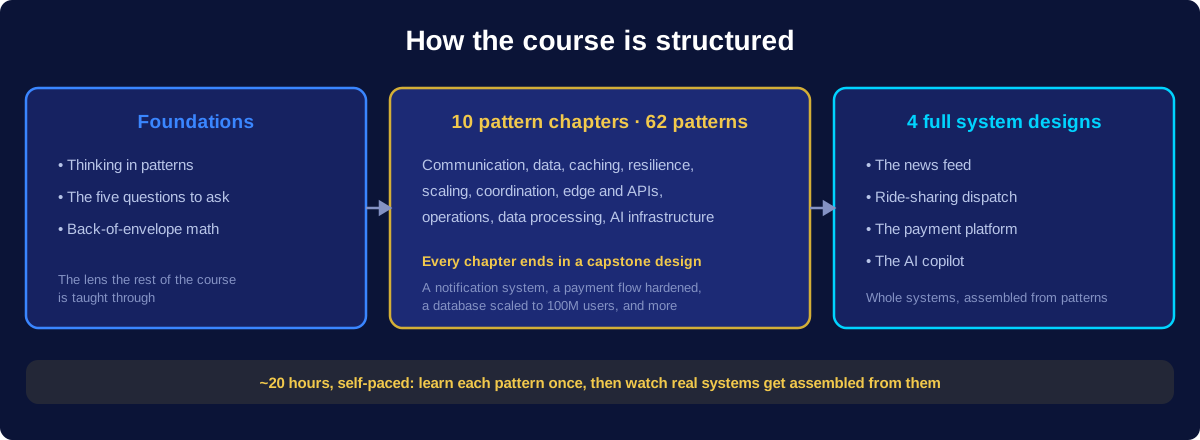
Foundations. Before any specific pattern, the course teaches the lens: thinking in patterns rather than memorizing architectures, the five questions to ask of any pattern (what problem does it solve, what does it cost, how does it fail, when is it wrong, what does it combine with), and back-of-envelope math, because a design conversation without numbers is a vibes conversation.
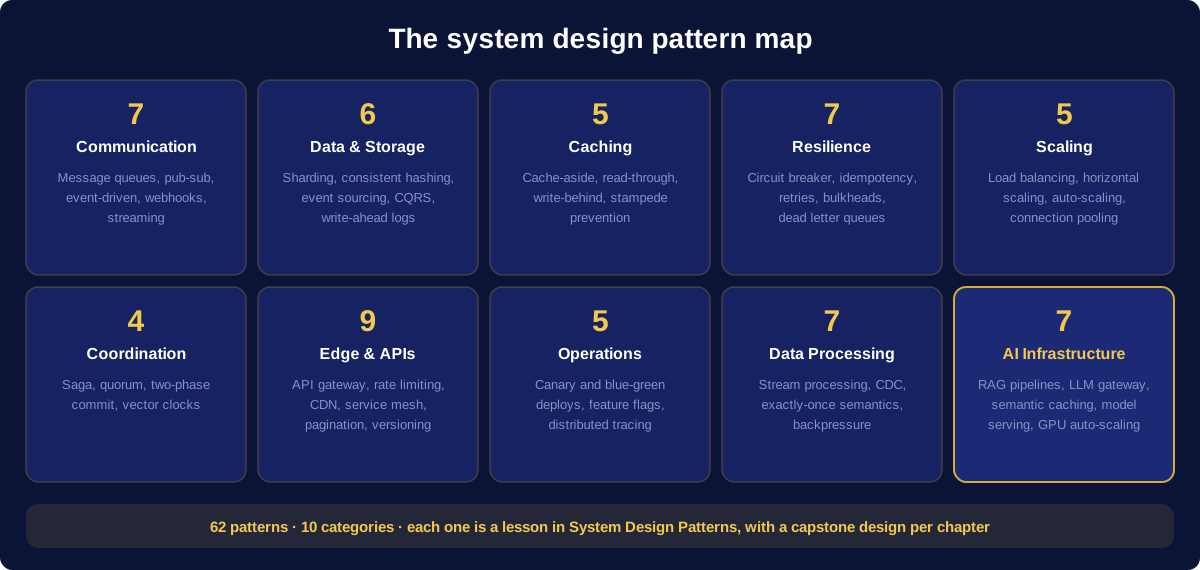
Ten pattern chapters, 62 patterns. Each pattern is its own lesson. Communication patterns (queues, pub-sub, event-driven, webhooks, streaming). Data and storage (sharding, consistent hashing, event sourcing, CQRS). Caching, all five strategies plus stampede prevention. Resilience (timeouts, retries, idempotency, circuit breakers, bulkheads). Scaling, coordination (saga, quorum, vector clocks), edge and APIs (gateways, rate limiting, service mesh), operations (canary deploys, feature flags, distributed tracing), and data processing (stream processing, change data capture, exactly-once, backpressure).
Then the chapter that dates every other patterns resource: AI infrastructure. RAG pipelines, LLM gateways, semantic caching, model serving, GPU auto-scaling, vector database sharding, and feature stores, taught as patterns with costs and failure modes like everything else. These are showing up in real architectures and, increasingly, in interview loops at AI-heavy companies, and to my knowledge no other structured course treats them as first-class patterns yet.
Every chapter ends in a capstone. This is the part I care most about pedagogically. After the communication chapter you design a notification system. After caching, you cache a product catalog properly. After resilience, you harden a payment flow. The capstone forces the chapter's patterns to work together, which is the difference between knowing words and speaking sentences.
Four full system designs close the course. A news feed, ride-sharing dispatch, a payment platform, and an AI copilot: complete systems assembled from the patterns you now know by name. If the full catalog interests you, the complete pattern list with one-line definitions is free on this site.
How the lessons are taught
Three deliberate choices shape the teaching style.
Every pattern answers the same five questions. The consistency is the point: after twenty lessons you start asking the questions yourself, of patterns the course hasn't taught you yet. That reflex, interrogating any architecture idea for its cost and failure mode, is the actual skill.
Real failures, not just happy paths. Each pattern comes with how it breaks in production: the retry storm that took down the payment processor, the cache stampede at midnight, the saga that half-completed. Patterns learned with their failure stories stick, and failure reasoning is precisely what senior interviews and real incident reviews both demand.
Plain language before jargon. Like everything we build, the lessons define terms before using them and prefer short declarative explanations to academic prose. If you can read a blog post, you can read this course.
Who the course is for
Backend engineers who want the vocabulary formalized. You've used half these patterns without naming them. Naming them, and knowing their costs, is what lets you defend choices in design reviews instead of gesturing at "best practices."
Data and AI engineers. The data processing and AI infrastructure chapters were built with you in mind: backpressure, exactly-once semantics, CDC, RAG, and model serving are your daily vocabulary now, and the rest of the course gives the systems context around them.
Interview candidates who keep getting told "go deeper." If your interview feedback says your designs are structurally fine but shallow, patterns depth is the missing layer. Pair it with the interview course; the ordering guide covers how.
Engineers between interview cycles. Course knowledge fades; pattern fluency compounds. This is the course built for the years between loops, not just the weeks before one.
Who should pick something else
You have an interview in the next few weeks. Take Grokking the System Design Interview first: the framework, the worked problems, and the practice loop are what move interview outcomes on a deadline. Patterns depth is the supplement, not the spine, when time is short.
You're completely new to backend work. The course assumes you know what a server, a database, and an API are. If you're earlier than that, System Design Fundamentals is the gentler on-ramp.
You want distributed systems internals at textbook depth. The patterns course teaches working fluency. For Dynamo-paper-level internals, Advanced System Design Interview, Volume II is the deep-dive course, and DDIA remains the book.
Where it sits in the course family
The cleanest way to think about the catalog now: Fundamentals is the on-ramp vocabulary. System Design Patterns is the concept layer: how systems actually work, for every engineer. Grokking the System Design Interview is the interview layer: the framework and 18 worked problems under a clock. Volume II is the senior bar: real-system internals and harder problems. The annual subscription unlocks all of them, which turns "which course" into "which order," and that question has its own dedicated guide.
Frequently asked questions
What is the System Design Patterns course? A ~20-hour course teaching the 62 patterns behind scalable systems across 10 chapters, from communication and caching through AI infrastructure, with a capstone design per chapter and four full system designs at the end. It lives on DesignGurus.io with free preview lessons.
Is it an interview prep course? It helps interviews substantially, but it's not interview-shaped. It has no mock-interview framework or time-boxing practice; it builds the conceptual depth that makes your interview answers survive follow-up questions. For the interview loop itself, the flagship course is the tool.
How is it different from Grokking the System Design Interview? The interview course teaches you to run a 45-minute design conversation: framework, worked problems, practice loop. The patterns course teaches how systems work, one pattern at a time, with production failure stories. Concept layer vs interview layer; the full comparison is here.
Do I need prior system design experience? You need basic backend literacy (servers, databases, APIs). You don't need distributed systems experience; the foundations chapter and the five-questions method are designed to build the reasoning from scratch.
Is it relevant for data and AI engineers? Directly. The data processing chapter (streams, CDC, exactly-once, backpressure) and the AI infrastructure chapter (RAG, LLM gateways, semantic caching, model serving) were built for exactly those roles, and they're the chapters most patterns resources don't have at all.
Which patterns matter most for interviews? About a dozen carry most interview loops; that prioritized list is here, with the probing question each one answers.
Related reading
- The 60+ System Design Patterns, Organized: A One-Page Reference. The full pattern catalog, free.
- Do You Need System Design Patterns AND Grokking the System Design Interview?. The ordering decision, by situation.
- The 12 System Design Patterns That Decide Most Interviews. The interview-priority subset.
- About Grokking the System Design Interview. The interview-layer course.
Preview it free
The free preview lessons include the foundations chapter's method (the five questions) and the start of the pattern chapters, which is enough to know whether the teaching style fits you. If it does, the course is the concept layer your interview prep, and your day job, sit on.
Explore System Design Patterns on DesignGurus.io · See All 62 Patterns Free